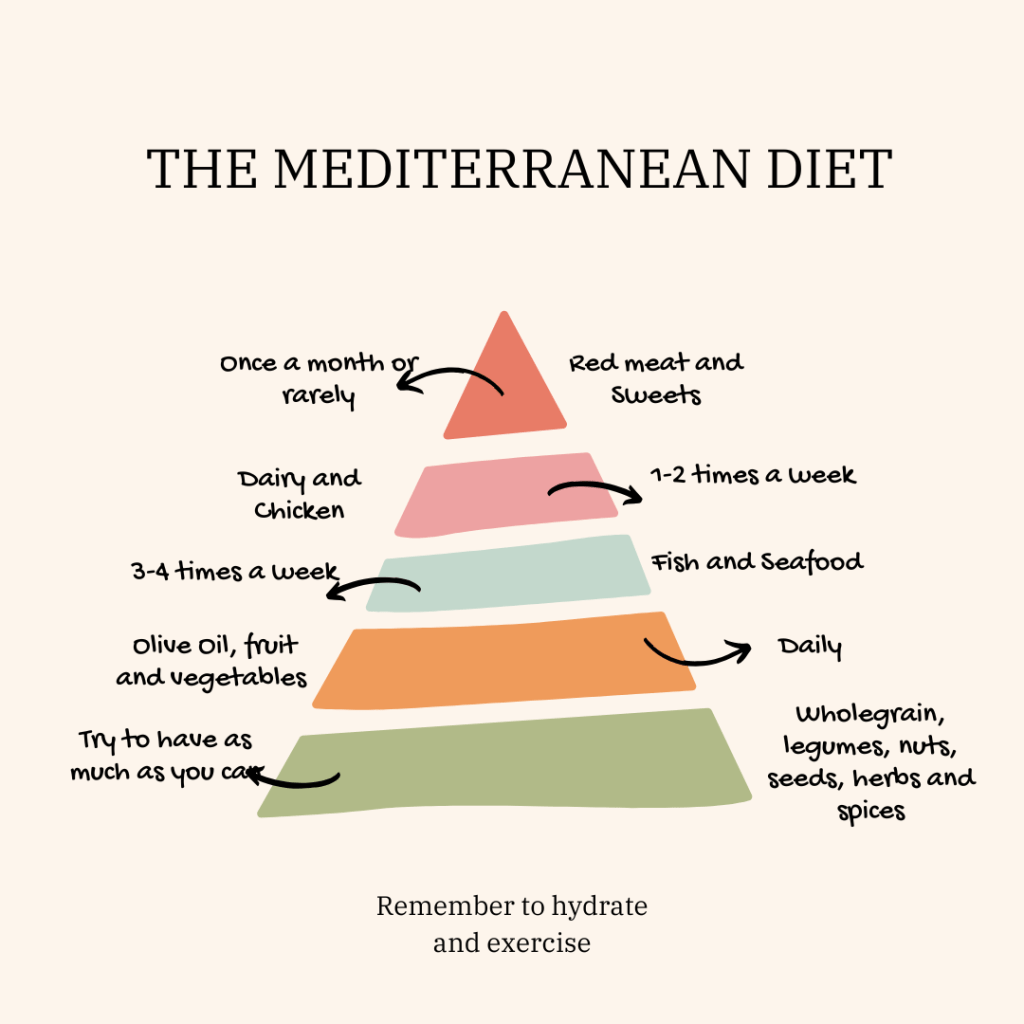
The phrase “Mediterranean diet” gets thrown around a lot, usually accompanied by glossy pictures of olives, sun-drenched tomatoes, and a glass of red wine on a terrace overlooking the sea. It sounds lovely, but the way it is often presented makes it feel more like a holiday fantasy than something you could actually cook on a Tuesday night after work.
At its heart, the Mediterranean diet is not really a diet at all. It is not about cutting out whole food groups or measuring every mouthful. It is a way of eating that grew out of the countries around the Mediterranean Sea, shaped by what was local, seasonal, and affordable. Vegetables, fruit, beans, nuts, olive oil, fish, herbs, and grains like barley or couscous. Meat and dairy still have a place, but they are not the main event. The focus is on balance, variety, and real food cooked in simple ways.
What I like most about it is that it is practical. It is not asking you to do anything extreme, and it is not pretending you will never touch bread, pasta, or cheese again. Instead, it nudges you towards meals built around vegetables and pulses, with meat or fish as a supporting act rather than the star. It encourages olive oil over butter, herbs and spices over heavy sauces, and fruit over puddings that send you into a sugar slump.
It also allows for flexibility. A plate of shakshuka with good bread fits perfectly. So does a bowl of lentil soup, a tray of roasted vegetables with couscous, or grilled fish with a salad of tomatoes and cucumbers. Even the occasional pizza can fit the spirit of the diet if it is topped with vegetables and eaten alongside a simple salad. What it avoids is excess: too much red meat, too much processed food, or too much sugar.
There is research behind it too. Studies show that people who eat in this way have lower rates of heart disease and live longer, healthier lives. But honestly, even if you put the science to one side, it makes sense. Meals built around colourful plants, fresh ingredients, and healthy fats will make you feel better than ones that come wrapped in plastic or pulled out of a drive-through bag. Plant diversity and the benefit of a healthy gut microbiome is a growing area of research and one that is already talked about way more than when I first heard about it (and did the Zoe programme for a bit) a couple of years ago.
The Mediterranean diet is not about copying exactly what people in Italy or Greece eat, because our seasons and ingredients are different. It is about using the same principles where you live. Swap in the vegetables that are in season near you. Use beans and lentils in hearty stews. Make olive oil your first choice for cooking. Keep the food simple, balanced, and enjoyable. Swap Greek yogurt and olive oil for cream, milk and butter when you mash your potatoes.
So if you are wondering what the Mediterranean diet is, the answer is simple: it is a way of eating that values variety, balance, and real food. It is not about perfection or restriction. It is about eating in a way that leaves you satisfied without feeling stuffed, and that you could happily carry on for the rest of your life.

Leave a comment