
There is so much talk about eating more plants that it can start to sound like a chore. We know we should add more vegetables, grains, beans, nuts, and seeds into our meals, but when you’re tired and just trying to get dinner on the table, the last thing you need is another rule. The good news is that it doesn’t have to feel like one. Tiny tweaks can make a big difference, and you can sneak more plants into your meals without ever feeling like you’re forcing it.
Here are five of my favourite and most manageable ways to do it.
1. Add spinach to almost anything.
Spinach is the stealth ingredient that always delivers. Toss it into pasta sauce, stir it through curry just before serving, whisk it into eggs, or blend it into soups. It wilts away to almost nothing yet suddenly your meal feels richer without shouting “vegetables.”
2. Scatter nuts and seeds.
A sprinkling of pumpkin seeds over soup, sesame seeds in your stir-fry, chopped almonds in couscous, or walnuts in a side salad all bring crunch, texture, even a hint of fat that keeps you full. Keep a little jar of mixed nuts (I whizz mine in the food processer) or seeds on the kitchen counter, it becomes an effortless grab-on-top habit.
3. Bulk out sauces with vegetables.
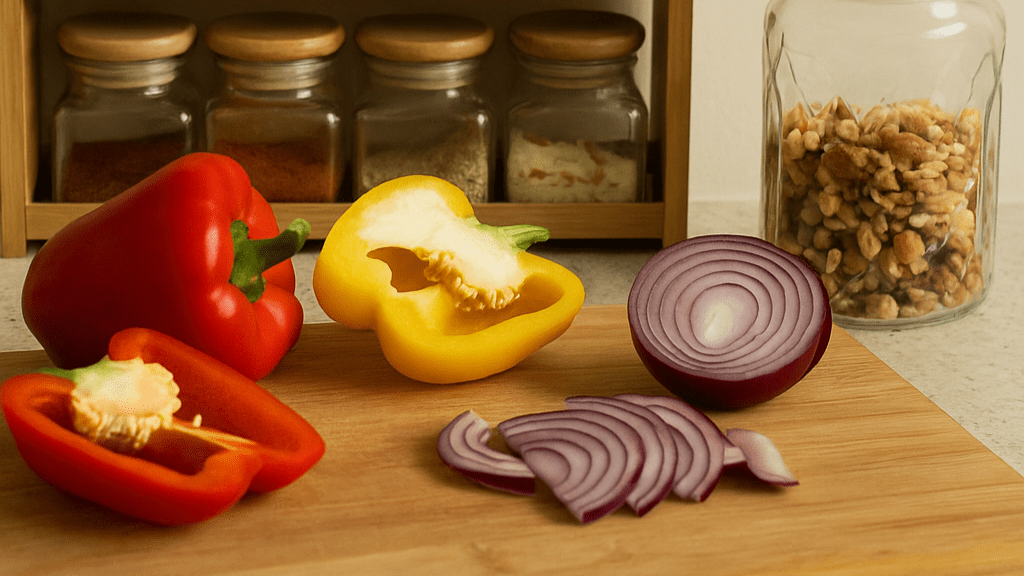
A plain tomato pasta sauce is fine, but when you grate in carrot, finely chop peppers, or stir in mushrooms, the flavour deepens and the meal becomes beefier without any meat. It’s not about what you’re taking out, but what you’re adding in. Finely chopped celery, carrots and onion fried first add flavour to most dishes.
4. Think of beans and lentils as add-ins, not just meals.
Rather than thinking beans belong only in hearty veggie stews, try mixing lentils into bolognese, chickpeas into your salad, or mashing white beans into mashed potato to add creaminess. They sneak in extra protein and fibre invisibly, and make meals feel more filling.
5. Swap sides for something greener.
Maybe you usually do plain rice, try stirring in peas or edamame. Instead of chips, roast sweet potatoes or try a salad tossed with tomatoes and cucumber. You don’t have to overhaul your meal, just tweak a small part so it feels colourful and fresh.
Plant Points: A Nudge Toward Rainbow Eating
Here’s where it gets interesting. An approach called “30 plants a week” is gaining attention and it fits beautifully with simple, sneaky tweaks. The idea is that eating a wide variety of plants, not just lots of one thing, supports gut health, immunity, and overall wellbeing.
Here’s why rainbow meals matter: different plants offer different fibres, vitamins, and plant compounds, all feeding different gut bacteria. A diverse gut microbiome means better digestion, stronger immune response, and even mood benefits.
A practical tip? When batch cooking, change things up at each reheating. That tray of roasted veg with couscous on Monday? Give it a sprinkle of chilli and toasted nuts on Tuesday, or add some peas on Wednesday. Frozen veg can be super convenient.
Why These Simple Tweaks Work
- They follow the inclusion over exclusion principle. You’re not subtracting, just enriching meals you’re already eating.
- They help build variety, not monotony and feeding that gut diversity matters.
- They feel doable on a regular evening, not lofty or time-consuming.
- They reward you in flavour as well as health and if it tastes good, you’ll keep doing it.

Leave a Reply